
About dormice
Meet the hazel dormouse
Britain’s secretive woodland acrobat — golden, gentle and perfectly adapted to life among the branches.
A first look
A mouse like no other
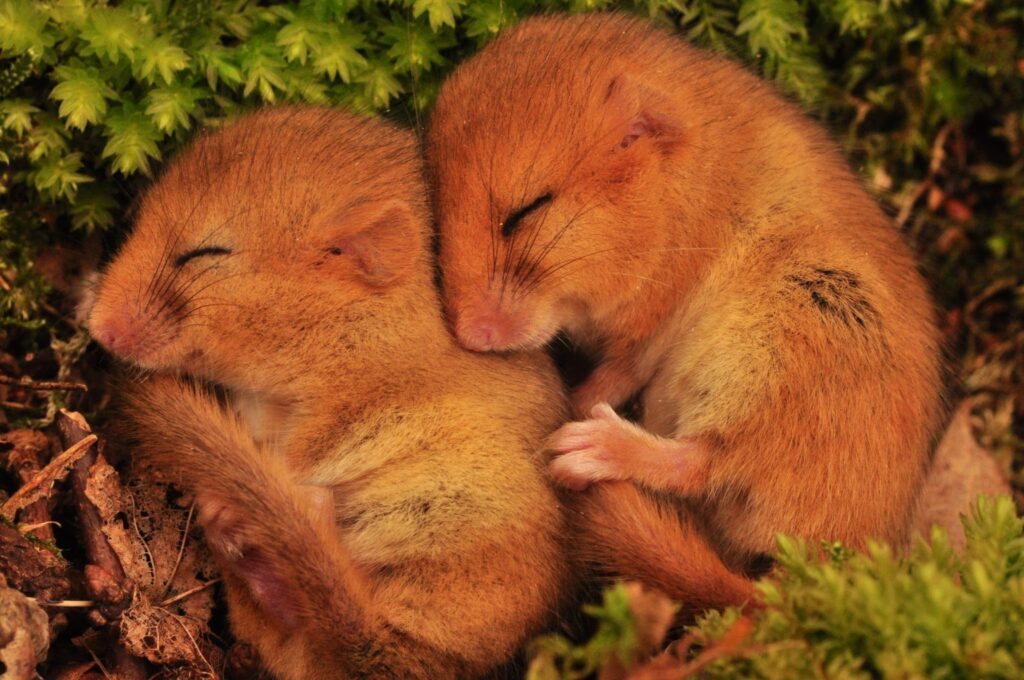
The hazel dormouse is Britain’s only native dormouse — and quite unlike any mouse you know. It wears a coat of warm sandy gold and carries a long, feathery tail, sleeping away as much as half the year. By night it climbs through the branches with squirrel-like ease, rarely touching the ground. Once found across much of the country, it has quietly slipped away from a great deal of it, and today this gentle woodland acrobat is increasingly rare — which is exactly why it’s worth knowing.
6–9 cm
body length, nose to tail-base
15–30 g
typical adult weight
½ the year
spent in hibernation
Vulnerable
status in Britain
Family ties
Not really a mouse
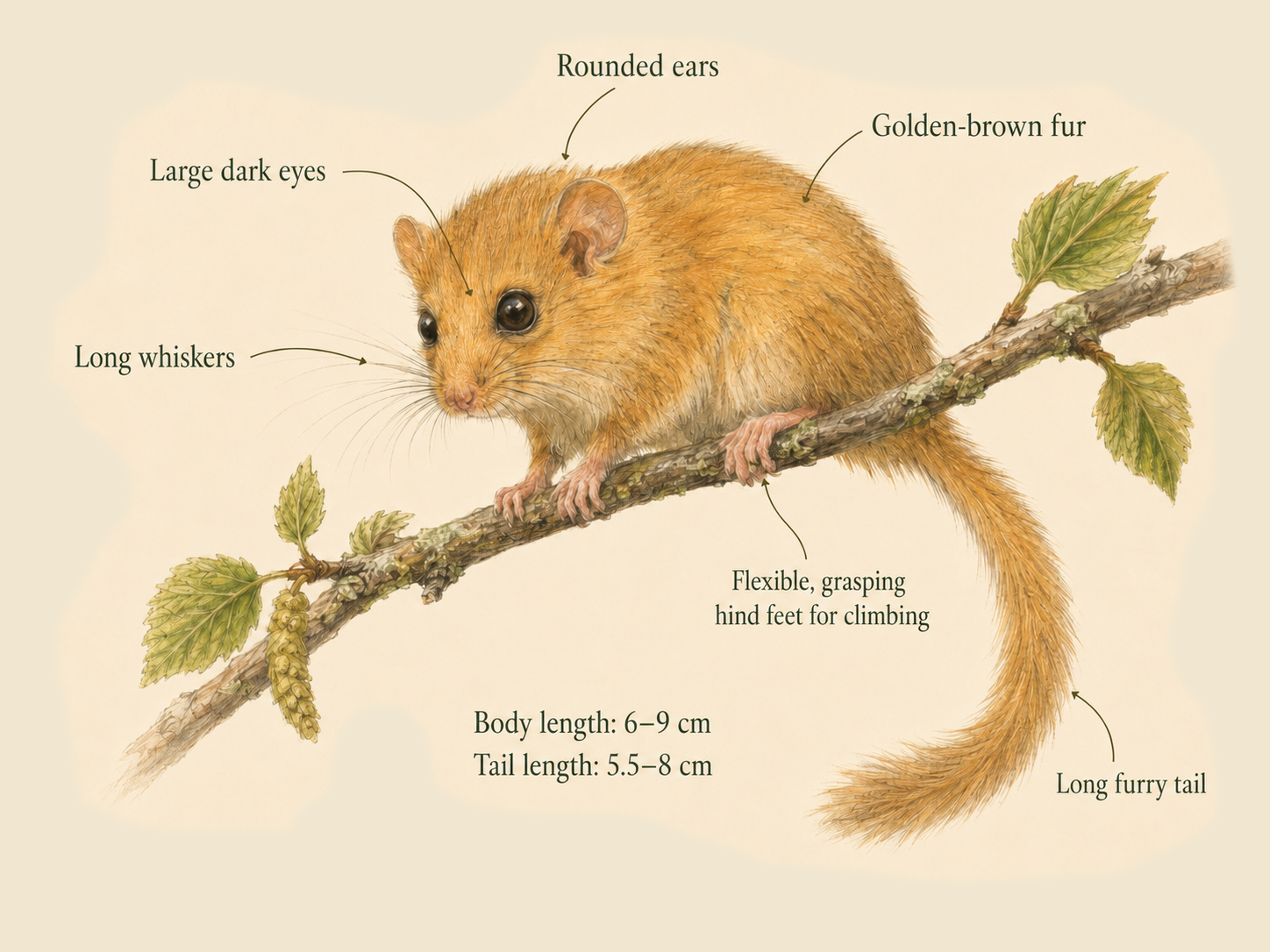
Despite the name, a dormouse is not really a mouse at all. It is a rodent — but one that belongs to its own ancient family, the Gliridae, set apart from the true mice and rats. Look closely and the differences show: a feathery tail, neat rounded ears, and flexible, grasping feet built for a life spent climbing and handling the woodland’s changing harvest.
- OrderRodentia
- FamilyGliridae
- SpeciesMuscardinus avellanarius
Spring to spring
A year in the hidden life
A dormouse’s year is short and busy. They wake in April, hungry, to the first blossom and pollen. Through May and June pairs court and mate; by midsummer the females are weaving breeding nests and raising tiny, blind young. As the litter grows, the woodland larder turns from insects and soft summer fruits to the energy-rich nuts and seeds of autumn. Fattened and ready, by November they curl deep into a hibernation nest and sleep the cold away.
Where they live
Life between woodland and hedgerow
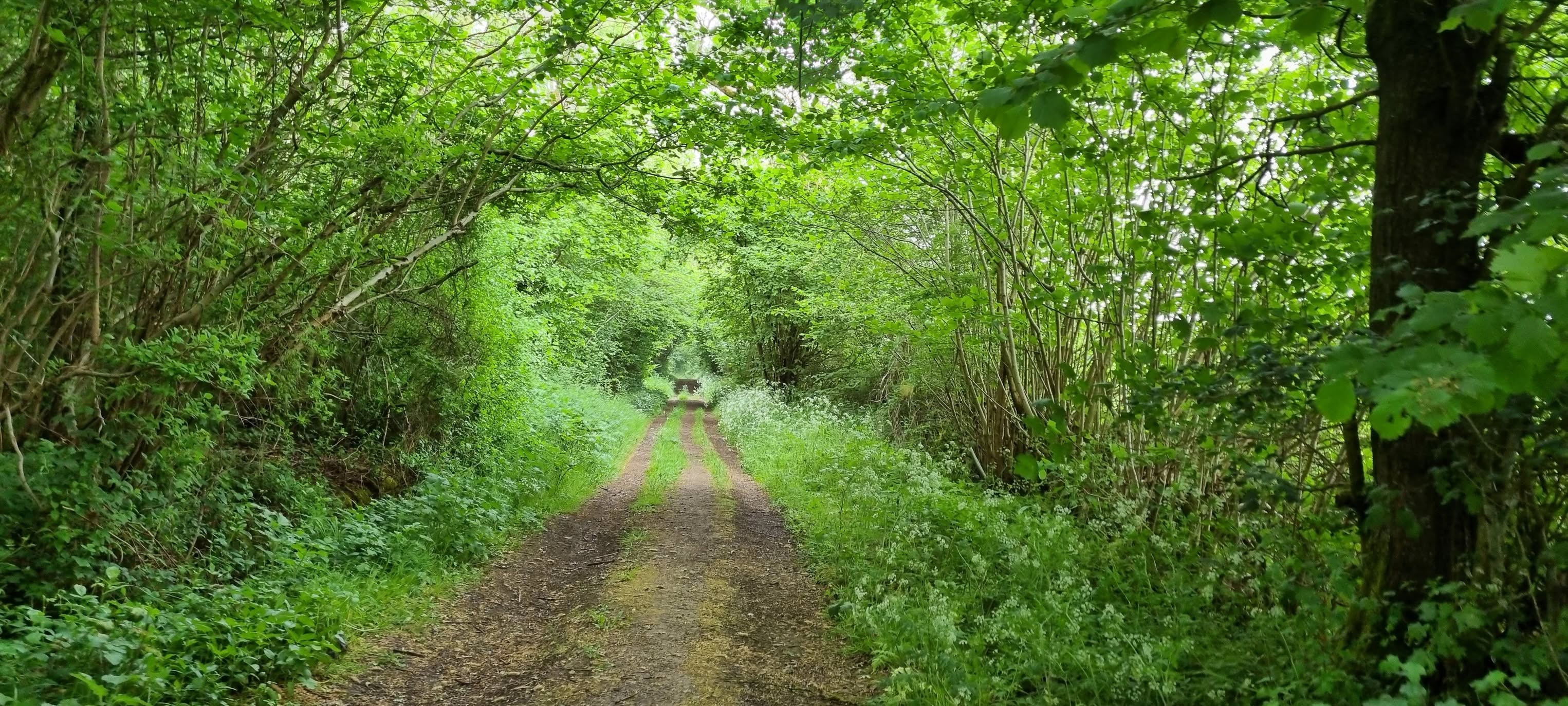
Dormice live their whole lives off the ground, in a green web of branches. They need varied, well-connected woodland — coppice, scrub and thick hedgerows knitting one wood to the next — to move and feed in safety. There they weave summer nests of leaves and shredded honeysuckle bark, raise their young in larger breeding nests, and tuck low for winter. Break those links, and a dormouse is quickly stranded.
The long view
A long journey, a recent decline

Meet them yourself
Help their story continue
From spring nest-box checks to winter habitat work and long-term monitoring, our volunteers are helping dormice thrive across Nottinghamshire. There’s a place for you in it.