Category: Uncategorized

  • Negative Footprint Tunnel Records

    Negative Footprint Tunnel Records

    Finding hazel dormice isn’t easy. And it’s even more difficult to prove that they’re absent from a particular patch. But dormice are protected in law. So, when new houses are built or roads expanded, the developers must ensure that any hedges, shrubby habitat or woodlands that are likely to be disturbed or destroyed, are thoroughly checked to see if dormice are present.

    The current tried and tested method used in England and Wales is nest tubes: long plastic tunnels with a wooden insert. They’re placed in hedgerows or hanging horizontally from branches and checked regularly for evidence of nests. Both Natural England and Natural Resources Wales – the government’s advisers for the natural environment in England and Wales – recommend nest tubes as the best means of surveying for dormice. But there are problems with the method.

    Hundreds of such surveys have been carried out over the past fifteen years and positive records of dormice submitted which helps build up a picture of dormouse distribution and their wider ecology. But there has never been a way of recording negative records. And negative records of species (collected using a standardised way) are important. They help us define a species range and predict more accurately where we’re likely to find dormice.

    Read on https://ptes.org/where-dormice-are-and-arent-the-advantages-of-footprint-tracking-tunnels/

  • Wild Tails…..

    Wild Tails…..

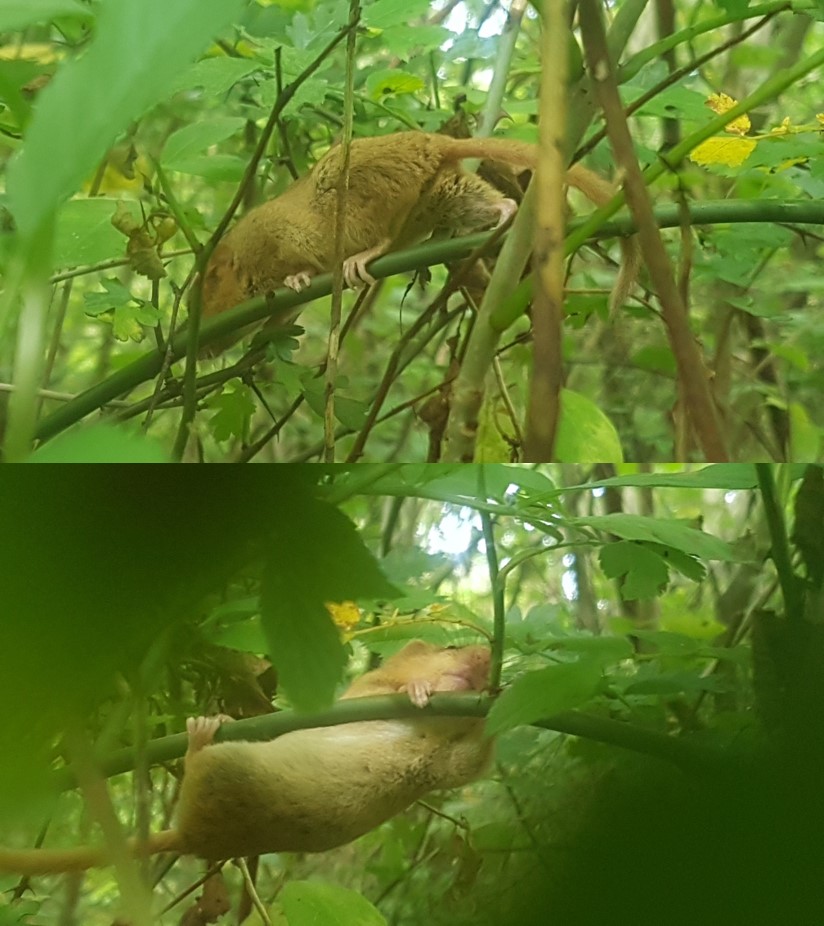
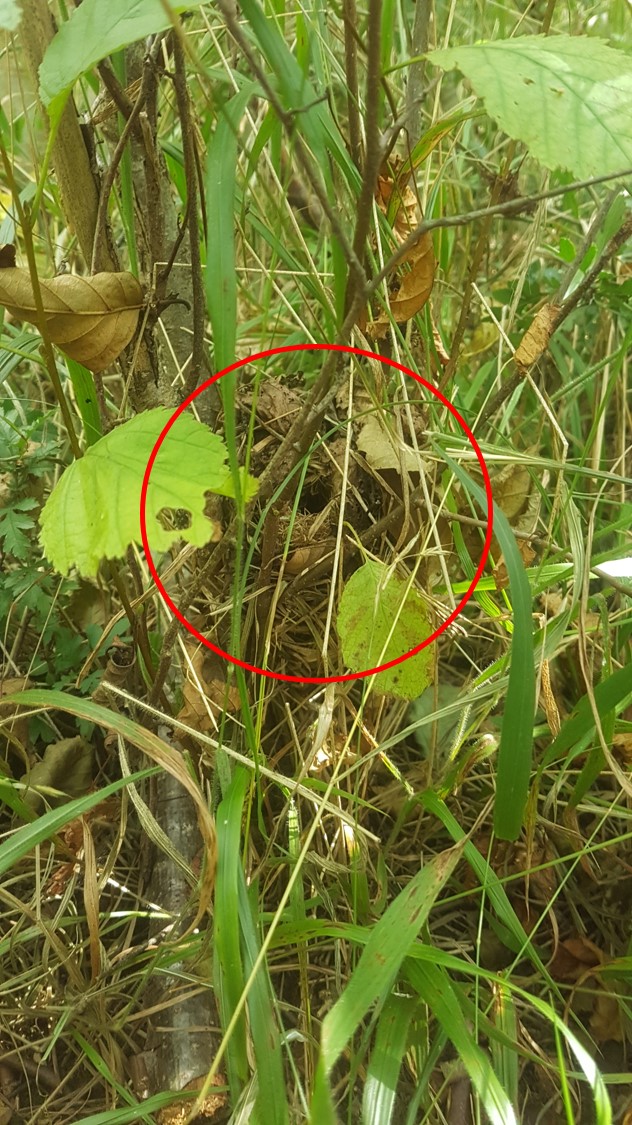
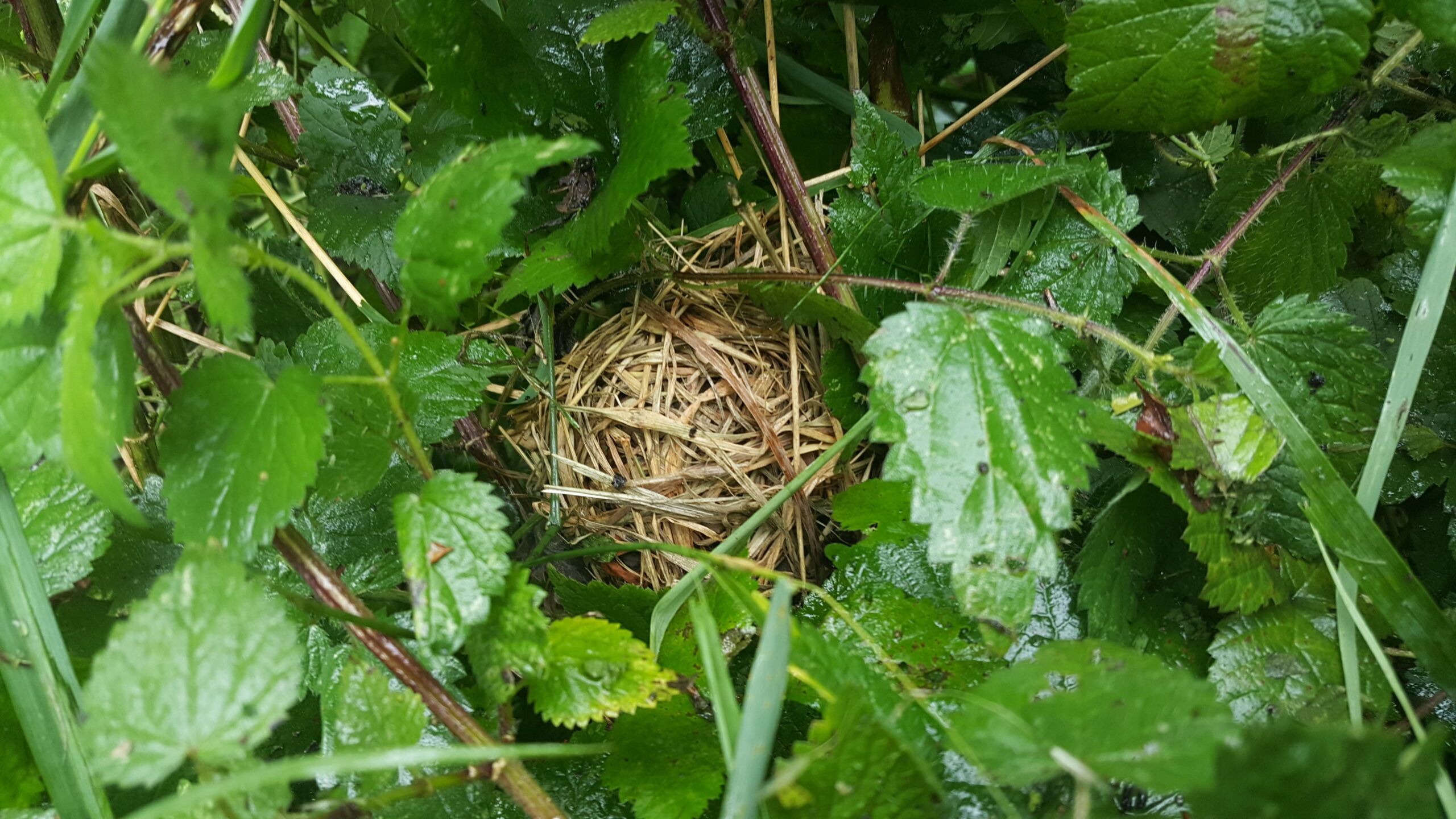
    During a recent trip to one of our Nottinghamshire Dormouse woodlands I happened upon another wild dormouse nest. It was hidden amongst a patch of bramble and rose scrub that was winding its way up a hawthorn tree, on the edge of a young coppice compartment. The nest itself was comprised of predominantly brown leaves around the exterior, with the occasional hint of stripped bark poking through. Typically, the core of a dormouse nest will contain a perfectly circular, woven structure. On this occasion I was not able to ascertain its interior structure, as just as I approached to gain a closer look at the nest, an adult dormouse shot out.

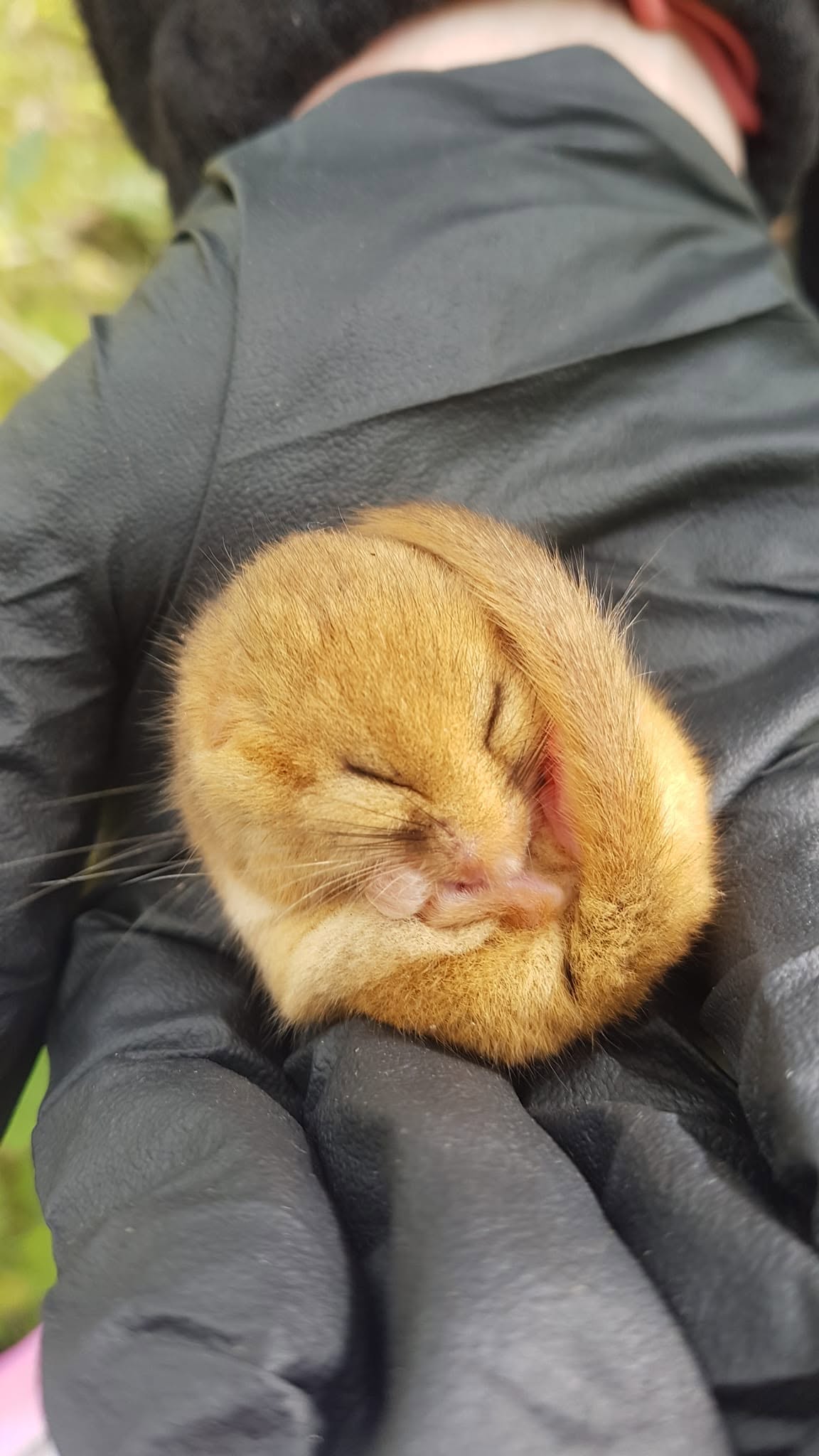
    A dormouse’s typical response is to pause, most often on the backside of the closest branch, trunk or twig. I always imagine them thinking…..’you can’t see me’, and quite often this is true. Dormouse do have a knack of blending into their environment. This particular dormouse however, moved gingerly closer, gently winding its way across a tendril of rose. Its sticky paw pads perfectly adapted to a life traversing the most delicate of branches, high up in the canopy. Its placement in the vegetation gave me a perfect view of its underside and I could clearly see that the dormouse was female, and to my delight, heavily pregnant. After taking a couple of photographs I quietly backed away and left her in peace.
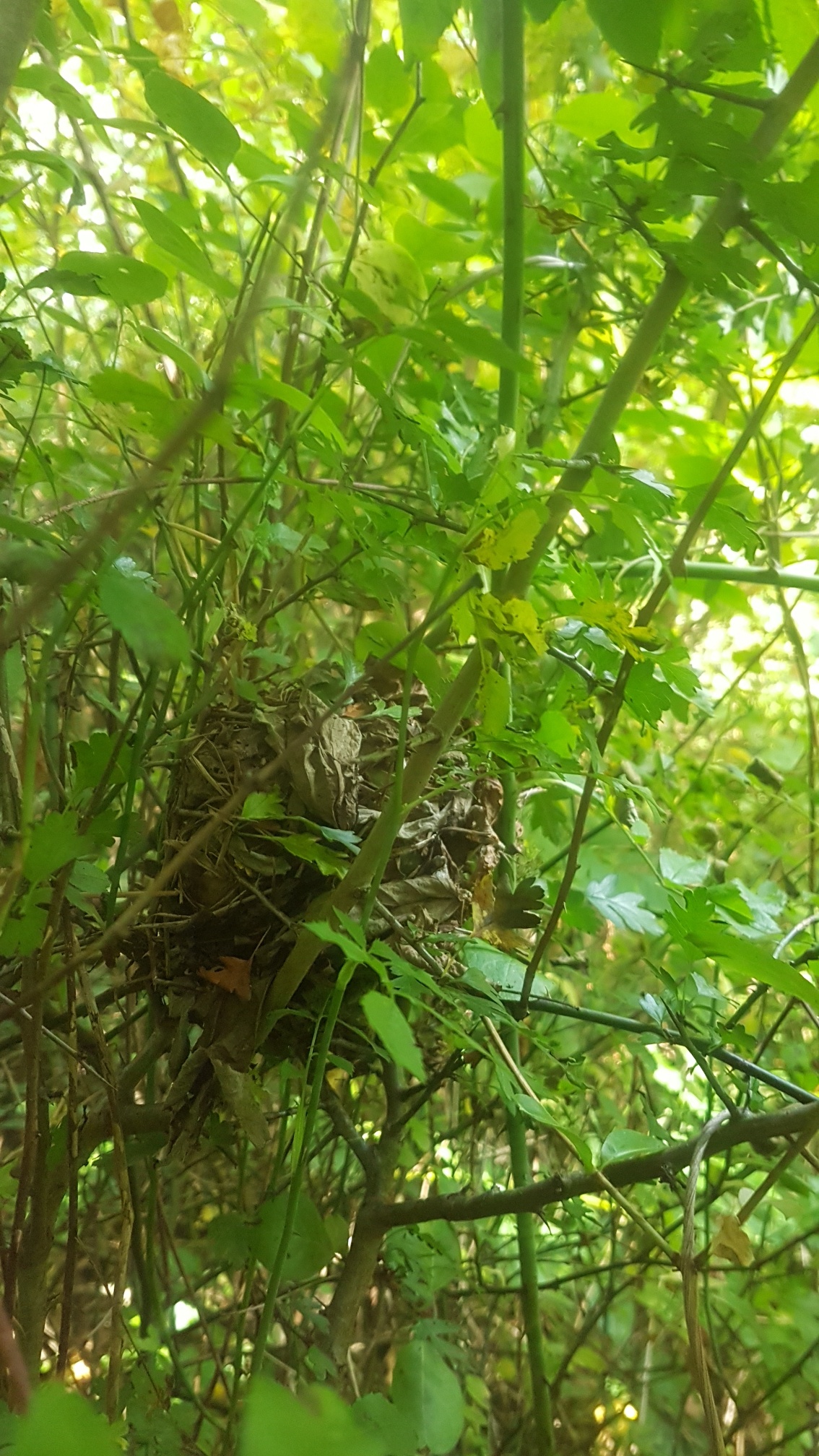
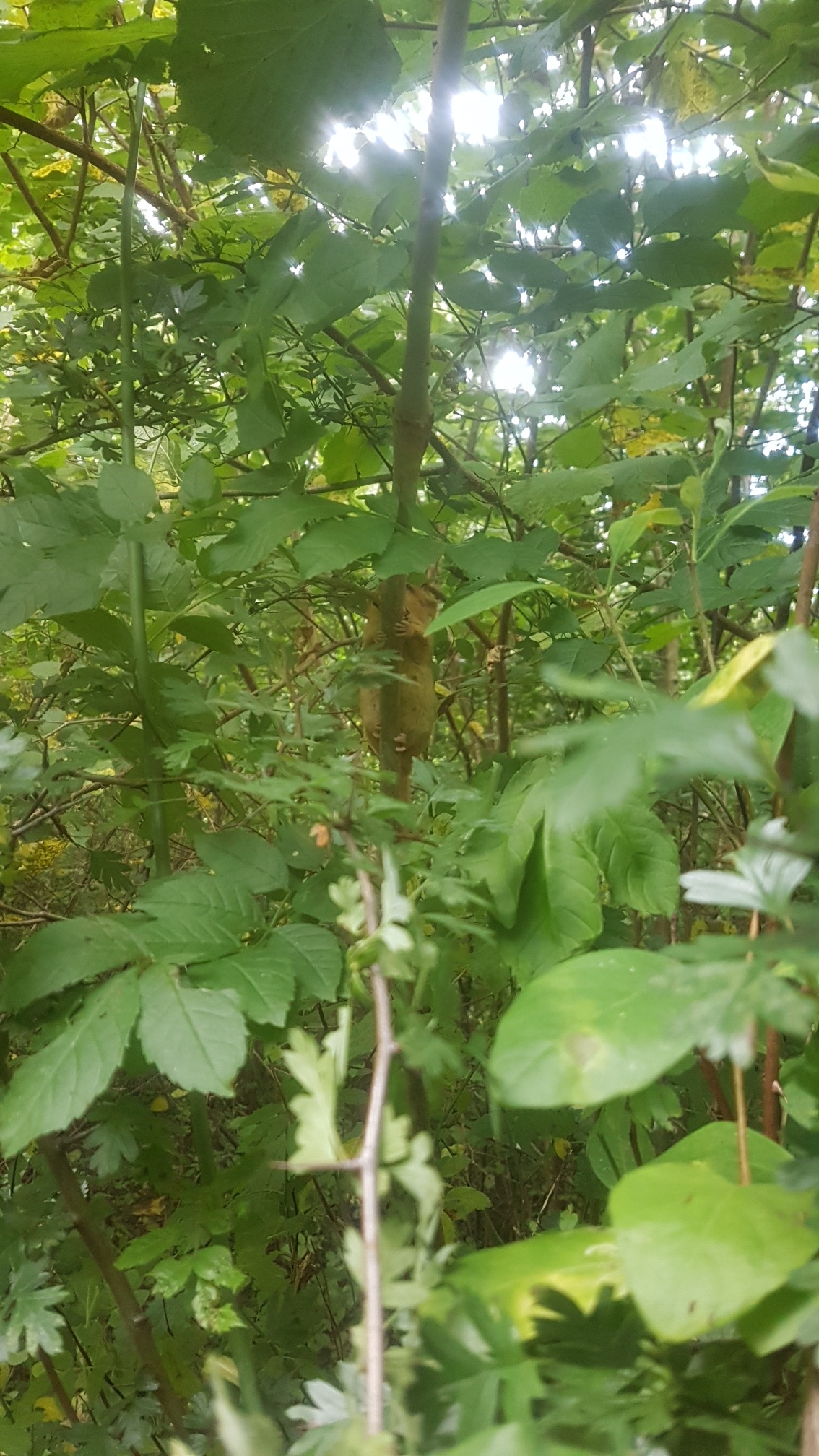
    A wild hazel dormouse on a rose stem beside its woven nestA wild hazel dormouse climbing among rose stemsA woven wild dormouse nest hidden in bramble and rose scrub

    People have often asked me if I could train them to detect wild dormouse nests, and honestly, I do not think that I could. It is not something that you can teach. I never go out purposely to find the nests, they just seem to find me, crazy as it may sound… I do not believe it is an action, it is more of an alert sense, of intimately knowing your surroundings, noticing the subtle changes in the vegetation, and most importantly understanding the ecological requirements of the dormouse.

    Wild nests are not simply a resting place, they are also a sanctuary, providing protection from predators, therefore they are often sited in dense thorny vegetation. The most important factor is a nests’ proximity to food. Activity in such a small creature can be costly in terms of energy consumption, thus most dormouse nests will be built very close to a food resource. As sequential feeders, dormice forage on a variety of foods as they become seasonably available. At this time of year, they are mostly feeding on fruits and berries such as blackberries, guelder rose, dogwood and hawthorn, so it is near these species that the dormouse is currently likely to be found.

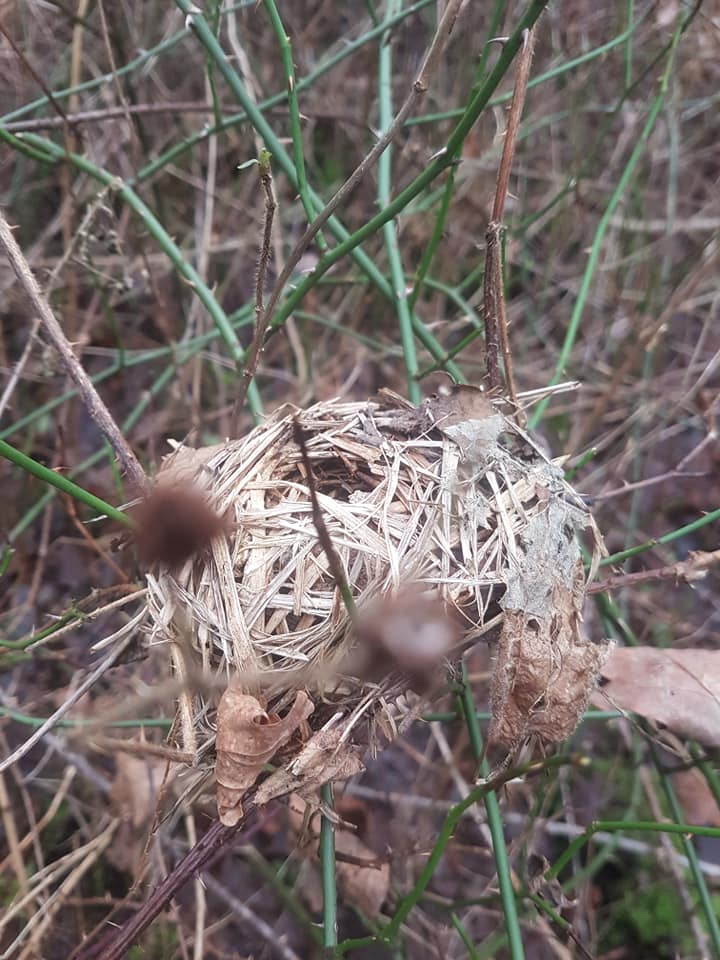
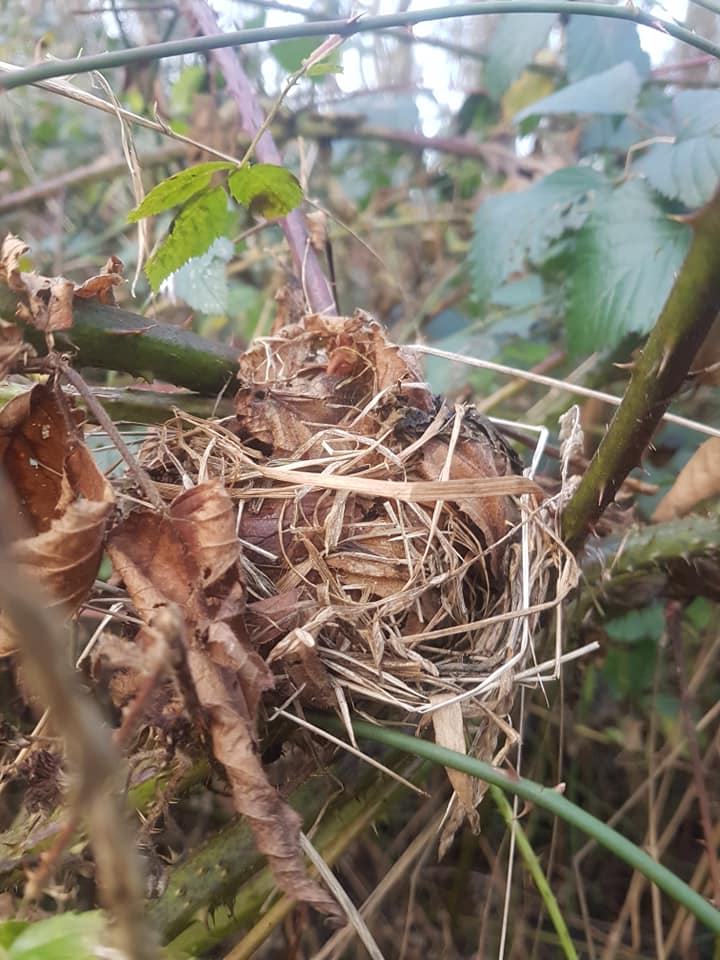
    Wild dormouse nests may come in many forms and sizes. They are always cylindrical, however, the components used to construct the nests vary according to the nests’ location and the vegetation/ materials present in the vicinity. For example, if a nest was constructed close to a patch of bracken, you are likely to find a nest artistically formed out of bracken fronds. A dormouse building a nest in a hazel coppice will painstakingly strip the bark from the surrounding trees and weave its nest, whereas a nest hidden away in a nettle patch, at the edge of a grassy clearing, may well be composed of dried grasses.

    Each one of these nests are a work of art, and although they are crafted with such skill and precision, providing shelter from the elements, sadly, they ultimately fade away with time. Rarely does a wild nest last beyond a season, the materials gradually break down and return to the earth……until next year.

    Lorna Griffiths

    Chair of Nottinghamshire Dormouse Group.
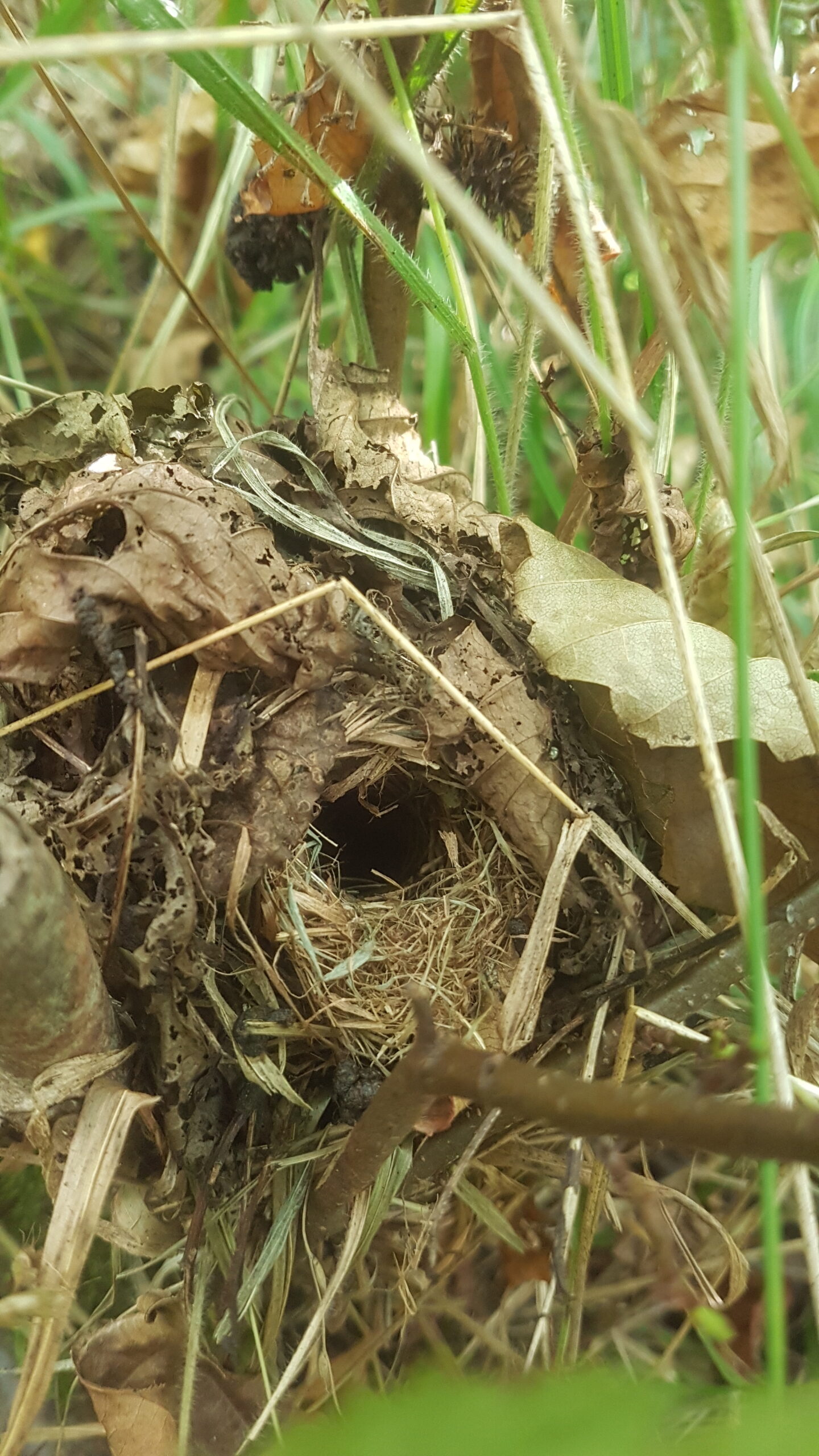
    A wild dormouse nest woven from leaves and stripped barkA wild dormouse nest tucked into dense vegetationA wild dormouse nest woven from bracken frondsA wild dormouse nest woven from dried grasses

    Woodland habitat where wild dormouse nests are found

  • The Dormouse Reintroduction Programme

    The Dormouse Reintroduction Programme

    As our usual outdoor activities during the season have been much reduced we have looked for new ways to engage with both our members and others about dormouse conservation. We hosted the first of what we plan to be several webinars last week and were very pleased that Ian White, Dormouse and Training Officer from the Peoples Trust for Endangered Species (PTES), was able to speak to us on the reintroduction programme which began in the 1990s. The full talk and the Q&A were recorded and are now available to watch.

  • 2019 round up

    2019 round up

    2019 has been another year of surprises, with oodles of positive outcomes. As such, I thought it worth celebrating all of the groups’ hard work this year by rounding up all of your achievements and discoveries.

    I think perhaps by far our biggest discovery was the dispersal of dormice into Silcock Wood which is adjacent to Gamston Wood. Very early in to the 2019 season we discovered a pregnant female in one of the 10 boxes that we installed. Each month after that we recorded more and more dormice inhabiting the boxes which led to the setting up of 10 additional boxes. During installation a pregnant female and wild nest was discovered very close to the railway line. Hopefully, the dormice have already started to disperse along the rail-track habitat and further afield.

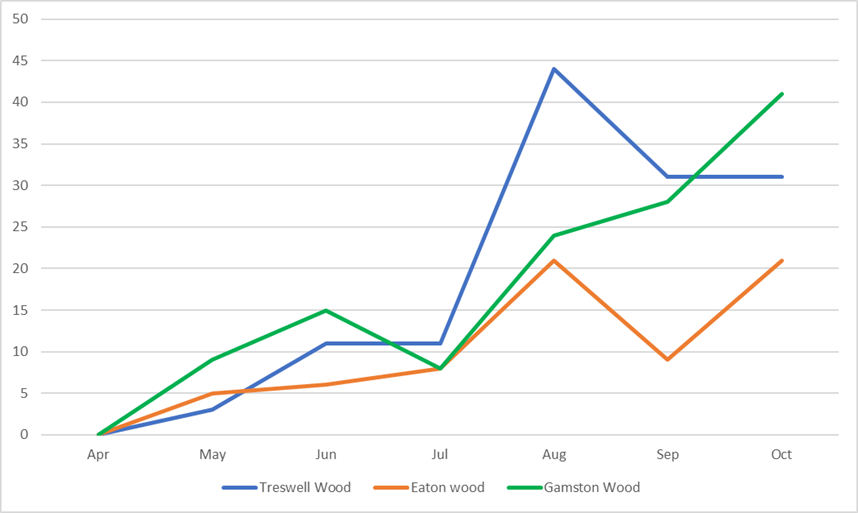
    Overall, dormouse numbers continue to rise in all three woodlands. Looking at the data, Gamston appears to have come out as the overall winner, however, the data includes the Silcock Wood dormice and therefore once again we must crown Treswell Wood as the King of all woodlands.

    Chart of dormice recorded per month in each of the three woodlands during 2019
    The graph above shows the overall number of dormice capture per month in each of the three woodlands during 2019 (all age classes).

    Treswell Wood

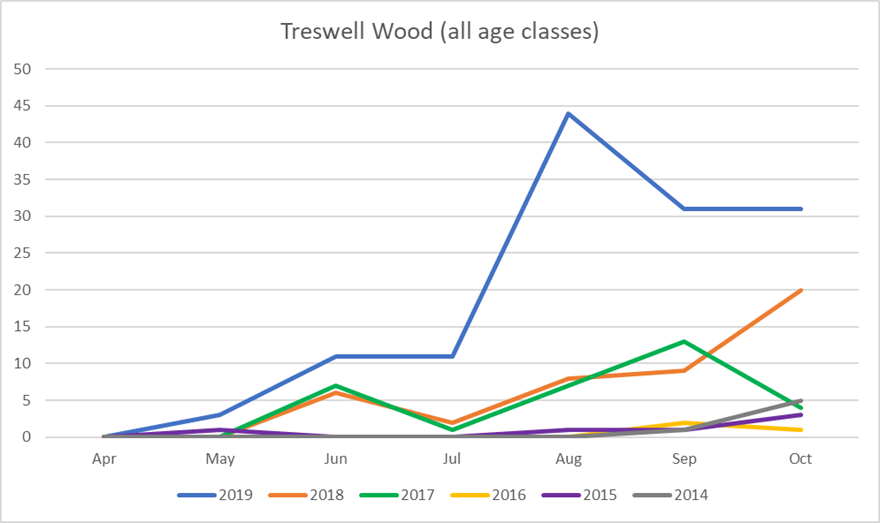
    Chart of 2019 dormouse records in Treswell Wood

    As many of you will know, the reintroduction in Treswell Wood was undertaken in 2013 and during the next three years dormouse sightings were low. However, things started to improve over subsequent years and numbers have been increasing ever since, with 2019 being our best year yet. This may of course be attributed in part to the further release of eleven new dormice to the woodland in June, to increase the genetic diversity of the population. We also recorded dormice in 3 new sections, C, K & L. In terms of squatting dormice, the bird-ringing team have recorded less incidents, though we have still had a couple of dormice hijack bird boxes. A wild dormouse nest was also recorded recently in bramble scrub along the edge of D-section.

    Gamston Wood

    Chart of 2019 dormouse records by month

    Gamston wood has seen a steady increase all year (this data includes Silcock Wood), with numbers spiking in September and October, likely due to dispersing juveniles. In the spring we mounted boxes along the western and southern boundaries, and later in the year recorded dormice in both sections, L-section on the western boundary became our most productive section, with 6 out of the 10 boxes recording dormice including litters. K-section, which was also new this year, recorded several dormice including a pregnant female in August and September. In terms of overall sections inhabited, Gamston wood was the most productive, with dormice recorded in 9 different woodland compartments (sections).

    Eaton Wood

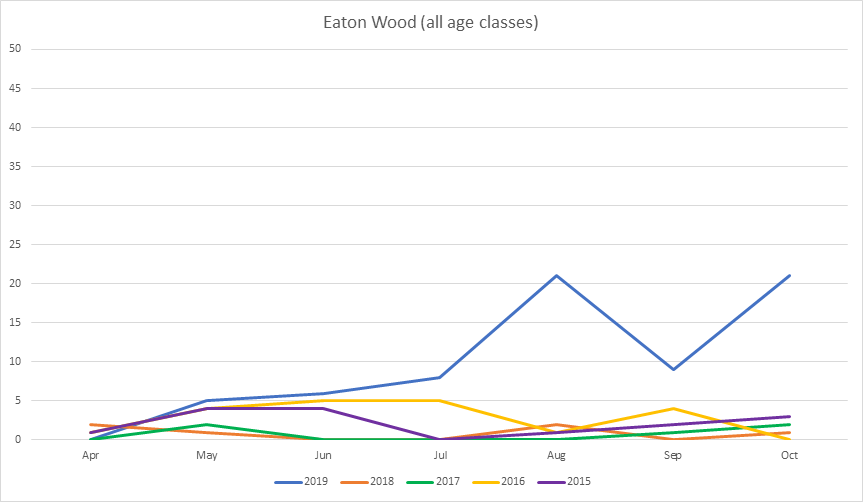
    Chart of 2019 dormouse records by month

    Each year since the reintroduction to Eaton Wood in 2014, dormouse numbers have been relatively low. This year however we recorded our best numbers yet. Michael and Dave braved the jungle that is J-section (optimal scrub habitat) to install 20-boxes, this section has proven to be our most productive section so far. We have plans to increase the number of boxes for the 2020 season. In terms of management, Eaton Wood is behind the other two woodlands, but with all the work that the Dormouse Group, Nottinghamshire Wildlife Trust and woodsman Ray Lister and his team have done so far to enhance the woodland, we can expect dormouse numbers to increase over the next 3 or 4 years.

    Lorna Griffiths

    Chair