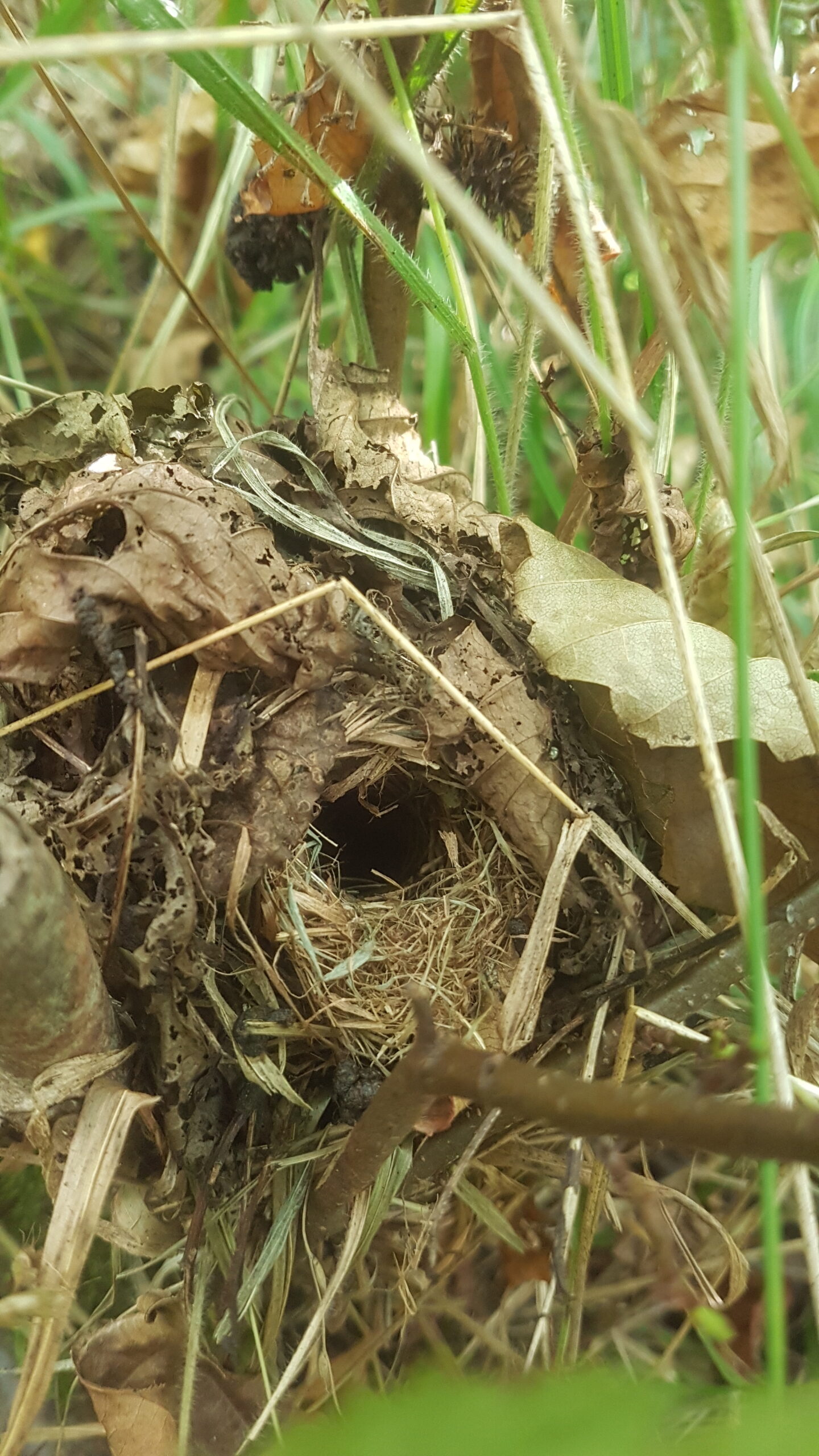
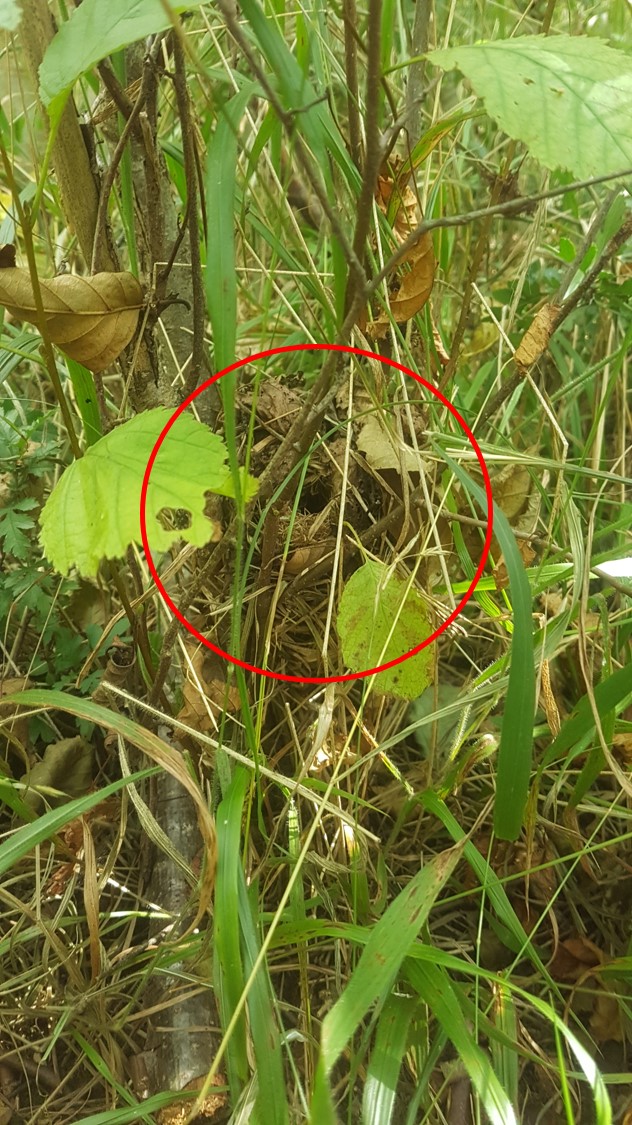
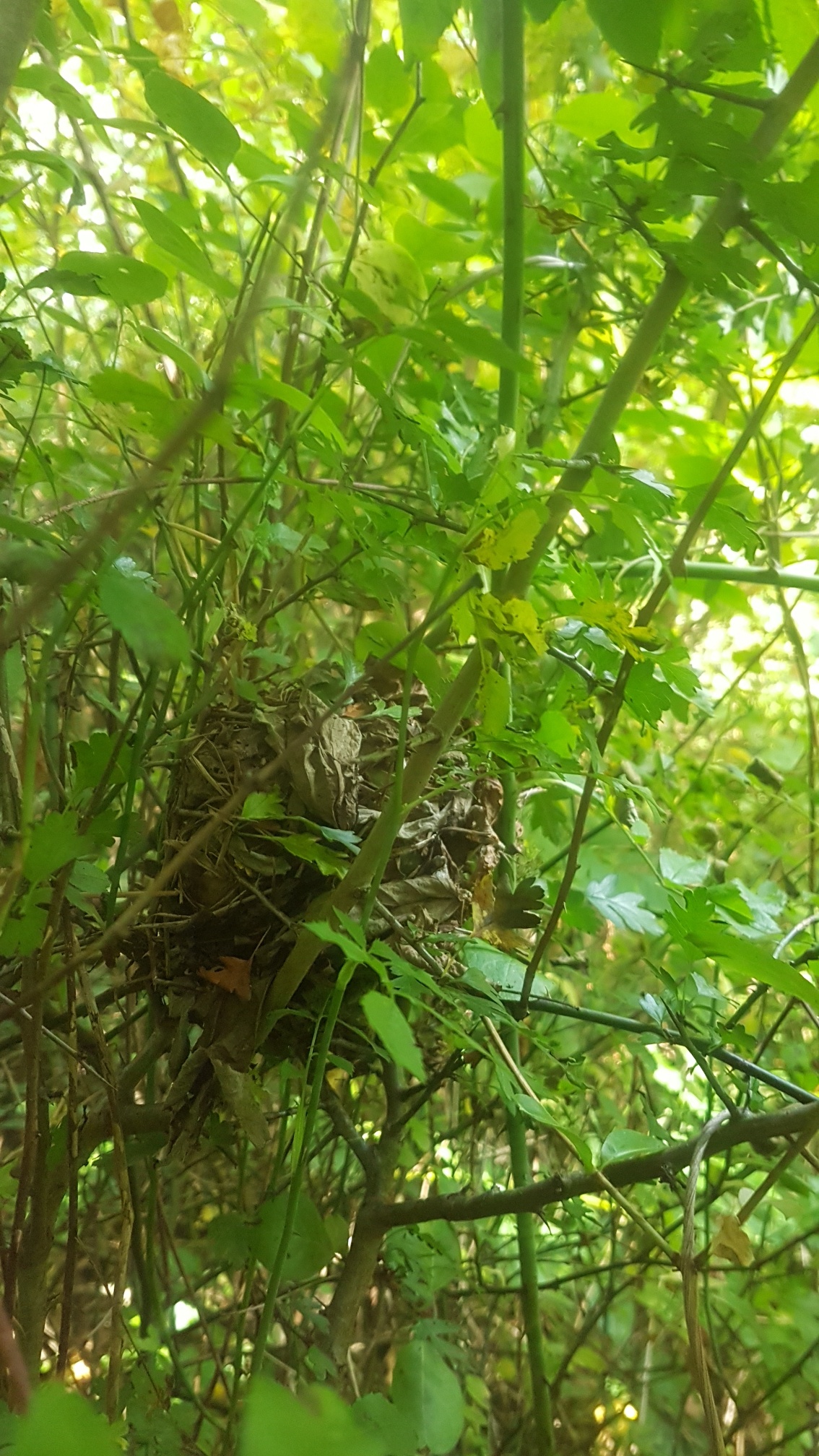
During a recent trip to one of our Nottinghamshire Dormouse woodlands I happened upon another wild dormouse nest. It was hidden amongst a patch of bramble and rose scrub that was winding its way up a hawthorn tree, on the edge of a young coppice compartment. The nest itself was comprised of predominantly brown leaves around the exterior, with the occasional hint of stripped bark poking through. Typically, the core of a dormouse nest will contain a perfectly circular, woven structure. On this occasion I was not able to ascertain its interior structure, as just as I approached to gain a closer look at the nest, an adult dormouse shot out.
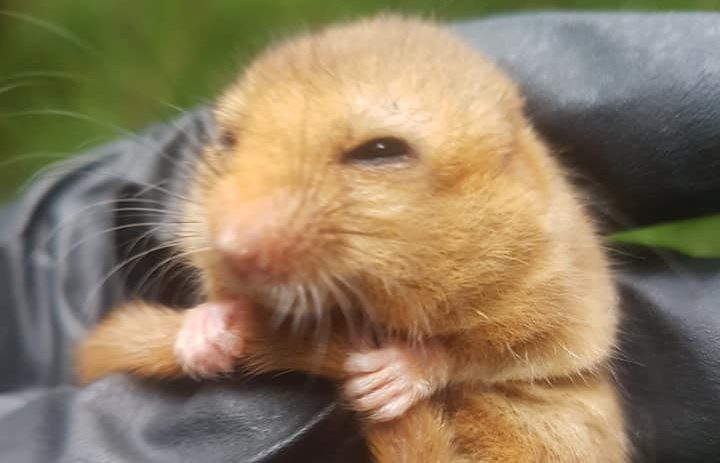
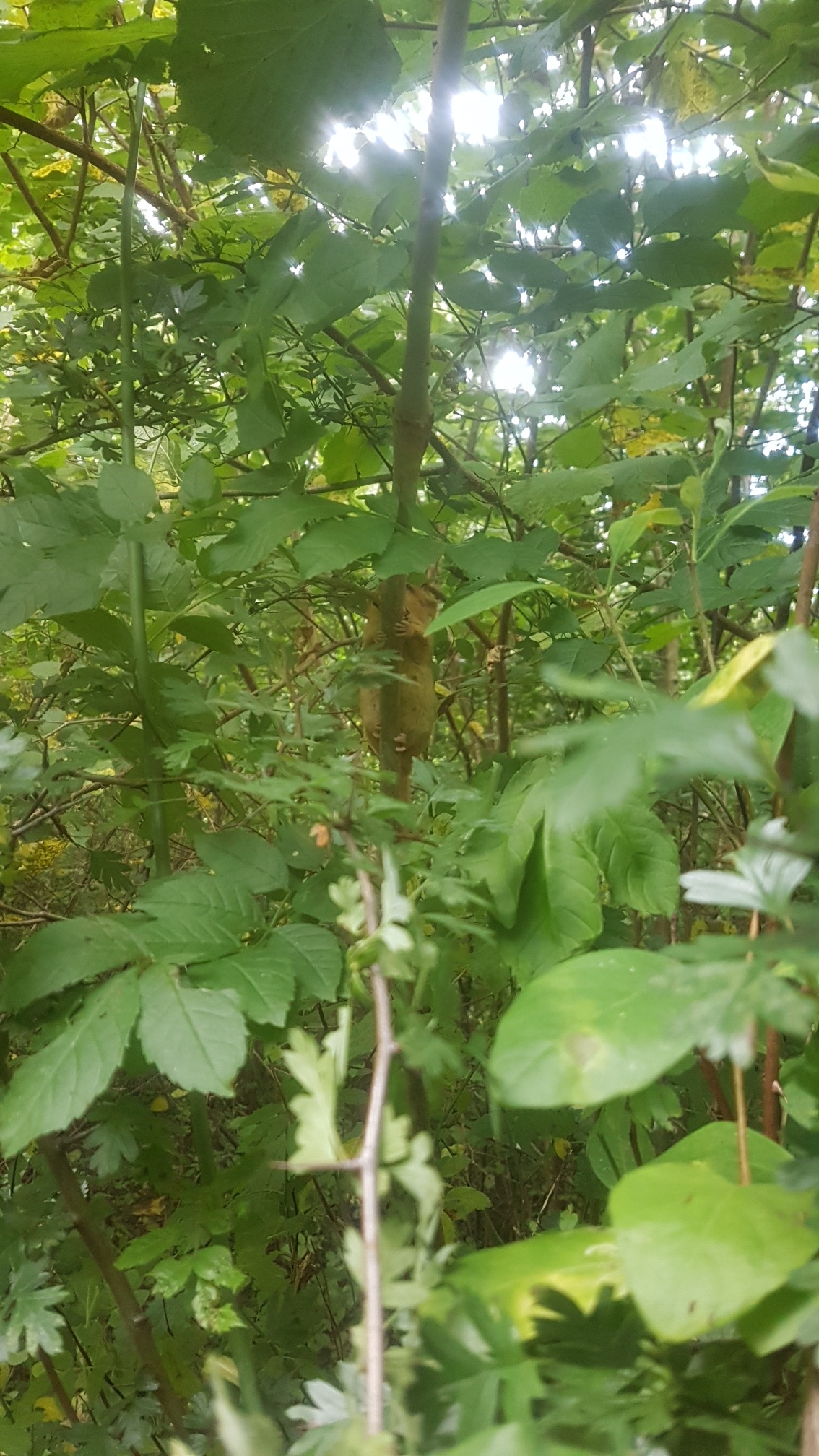
A dormouse’s typical response is to pause, most often on the backside of the closest branch, trunk or twig. I always imagine them thinking…..’you can’t see me’, and quite often this is true. Dormouse do have a knack of blending into their environment. This particular dormouse however, moved gingerly closer, gently winding its way across a tendril of rose. Its sticky paw pads perfectly adapted to a life traversing the most delicate of branches, high up in the canopy. Its placement in the vegetation gave me a perfect view of its underside and I could clearly see that the dormouse was female, and to my delight, heavily pregnant. After taking a couple of photographs I quietly backed away and left her in peace.
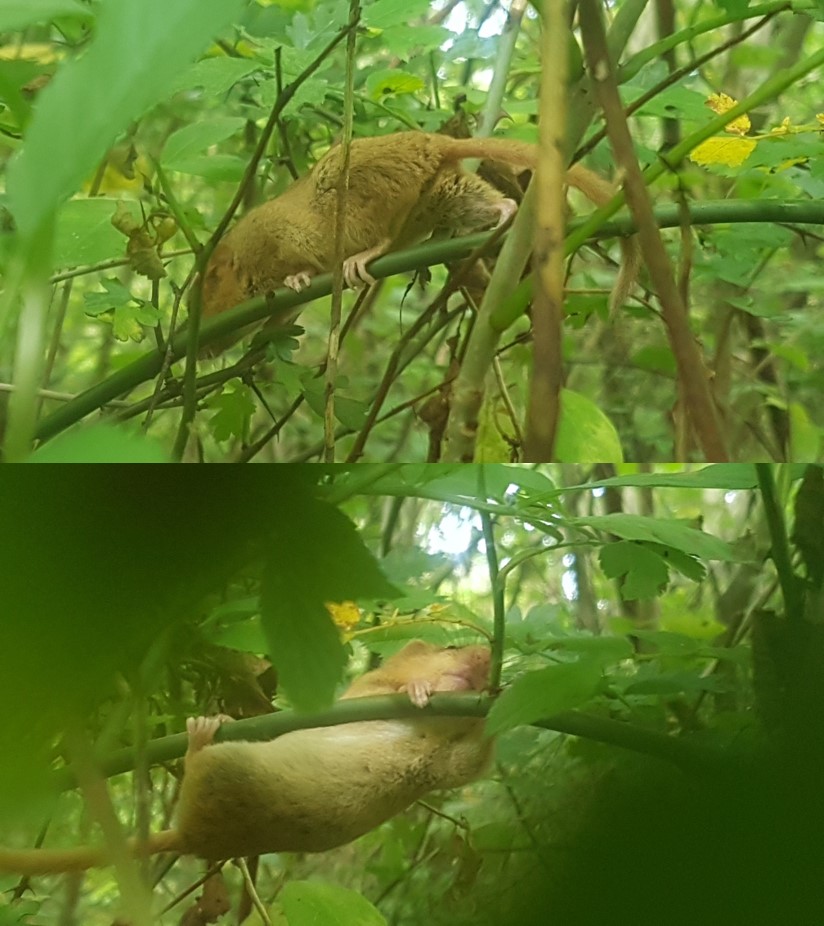
People have often asked me if I could train them to detect wild dormouse nests, and honestly, I do not think that I could. It is not something that you can teach. I never go out purposely to find the nests, they just seem to find me, crazy as it may sound… I do not believe it is an action, it is more of an alert sense, of intimately knowing your surroundings, noticing the subtle changes in the vegetation, and most importantly understanding the ecological requirements of the dormouse.
Wild nests are not simply a resting place, they are also a sanctuary, providing protection from predators, therefore they are often sited in dense thorny vegetation. The most important factor is a nests’ proximity to food. Activity in such a small creature can be costly in terms of energy consumption, thus most dormouse nests will be built very close to a food resource. As sequential feeders, dormice forage on a variety of foods as they become seasonably available. At this time of year, they are mostly feeding on fruits and berries such as blackberries, guelder rose, dogwood and hawthorn, so it is near these species that the dormouse is currently likely to be found.
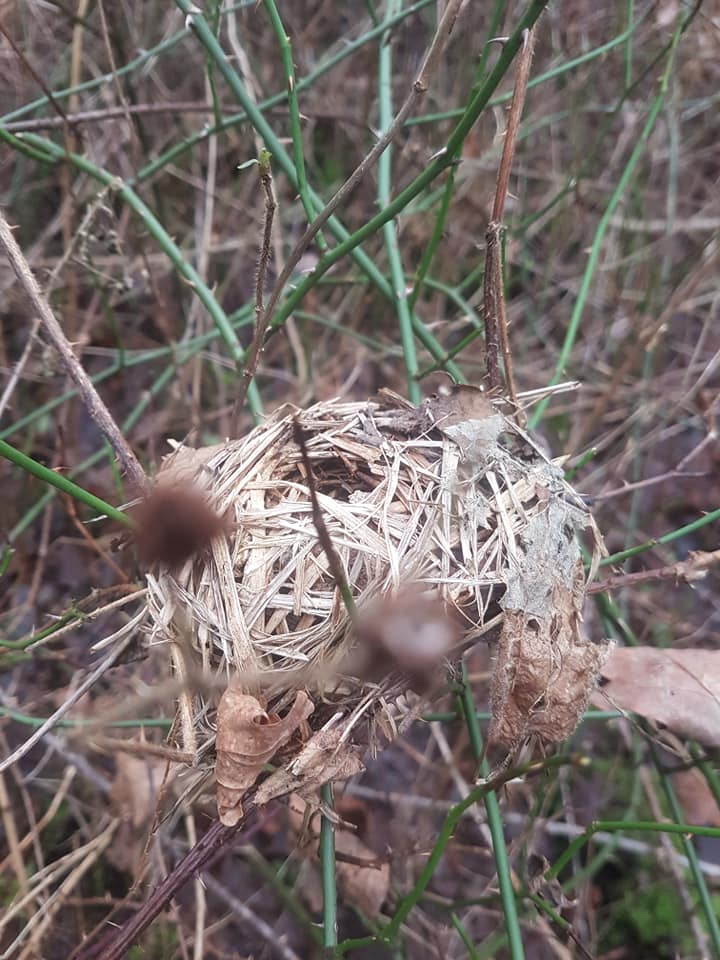
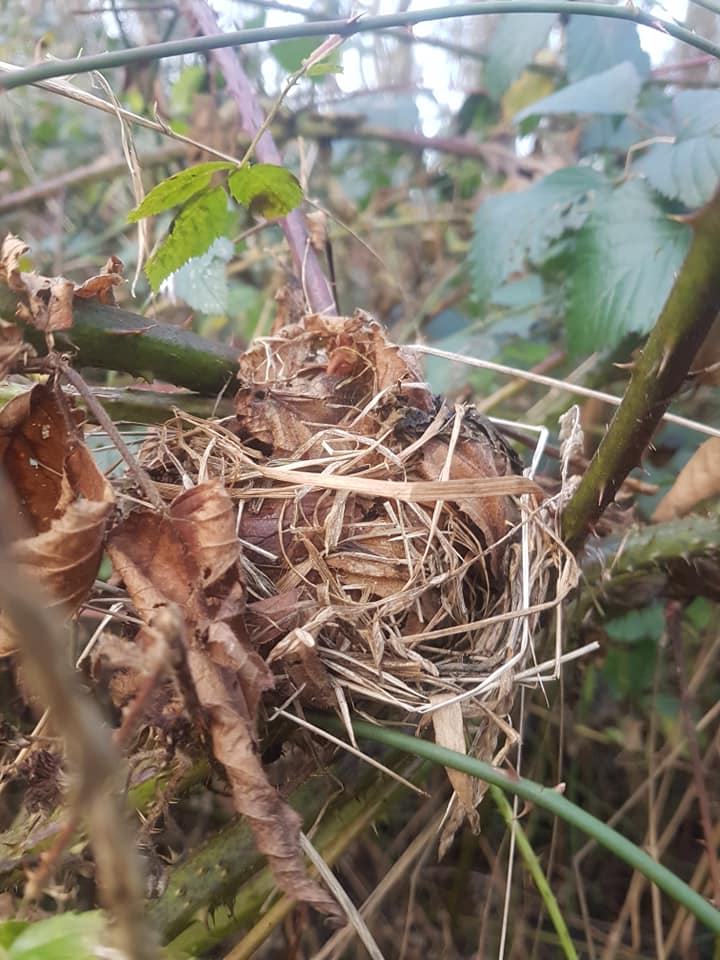
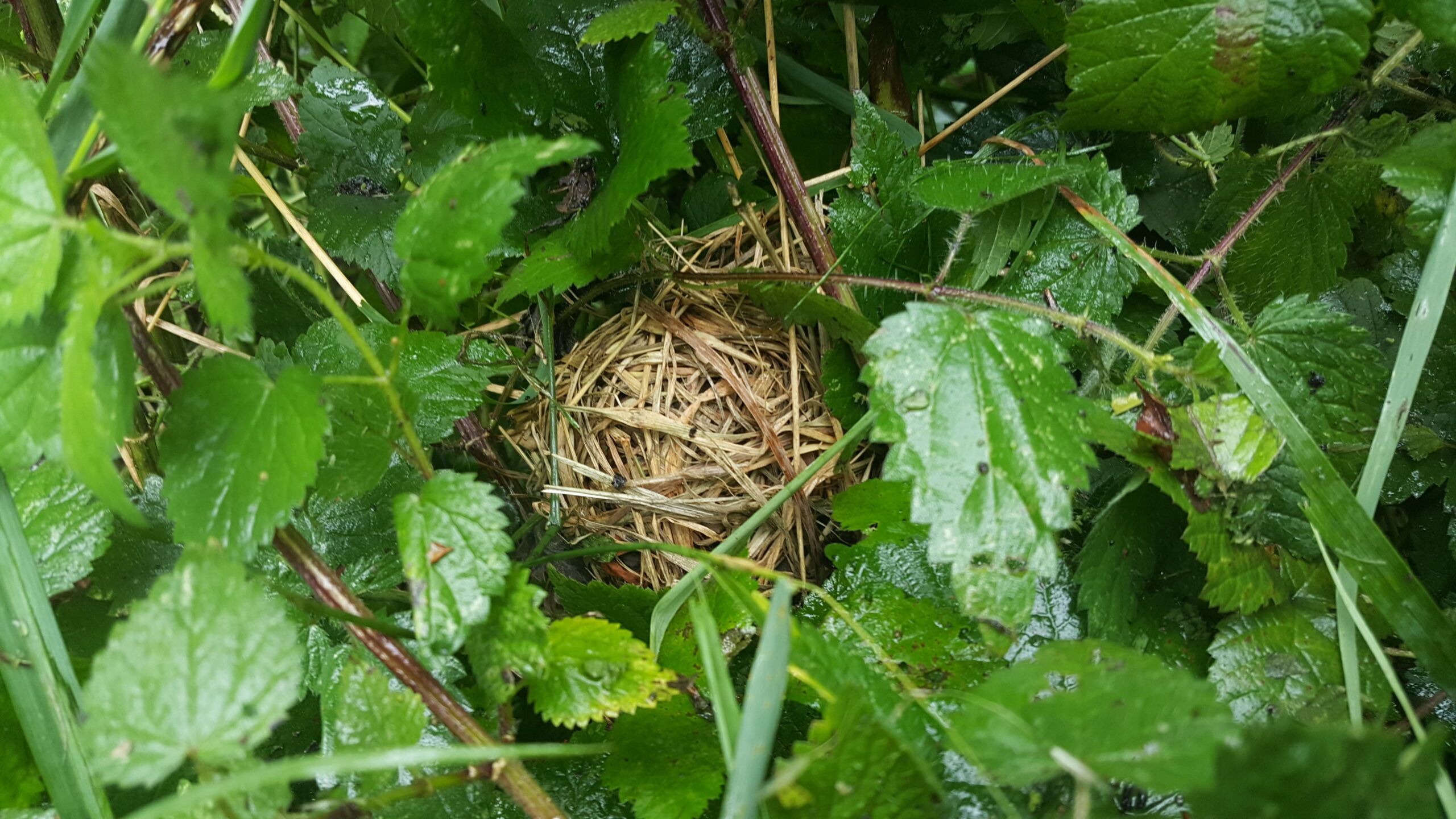
Wild dormouse nests may come in many forms and sizes. They are always cylindrical, however, the components used to construct the nests vary according to the nests’ location and the vegetation/ materials present in the vicinity. For example, if a nest was constructed close to a patch of bracken, you are likely to find a nest artistically formed out of bracken fronds. A dormouse building a nest in a hazel coppice will painstakingly strip the bark from the surrounding trees and weave its nest, whereas a nest hidden away in a nettle patch, at the edge of a grassy clearing, may well be composed of dried grasses.
Each one of these nests are a work of art, and although they are crafted with such skill and precision, providing shelter from the elements, sadly, they ultimately fade away with time. Rarely does a wild nest last beyond a season, the materials gradually break down and return to the earth……until next year.
Lorna Griffiths
Chair of Nottinghamshire Dormouse Group.